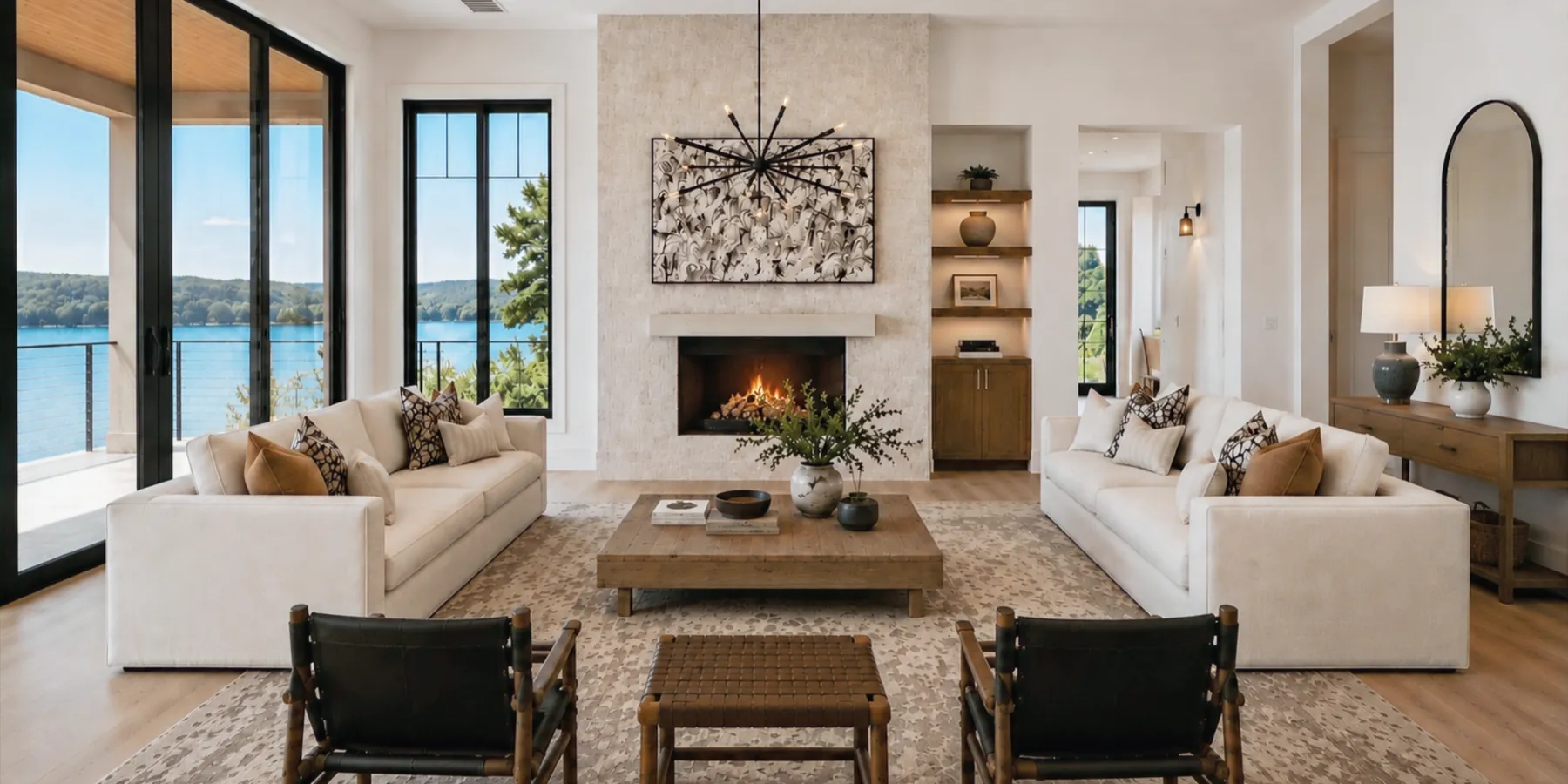
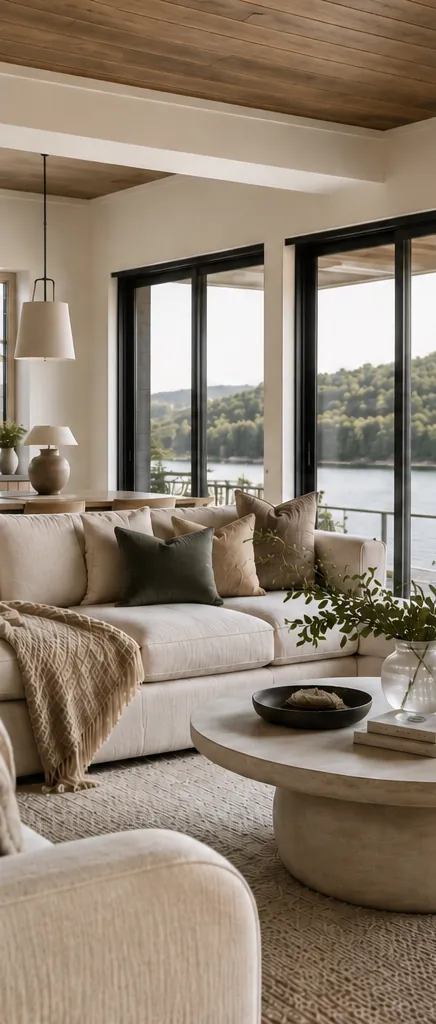
Motorized shades are custom shades with a small, quiet motor hidden in the roller tube or headrail, so they raise and lower from a remote, a wall keypad, an app, a voice assistant or a schedule. The Shade Haus is River Jane & Co.'s shade line, with motorized Roman and roller shades for homes across Austin, Lake Travis and the Hill Country. Motorized shades start at $399 a window and cordless shades at $299, depending on fabric and controls. It starts with a free 15 minute call, and every window is quoted in writing before anything is ordered.
They're made for tall glass nobody can reach, rooms with six windows that all need to move together, west light that arrives at the same hour every afternoon, and lake houses that sit empty during the week.
How motorized shades work
On a roller shade, a tubular motor slides inside the tube the fabric wraps around. On a Roman, the motor sits in the headrail and turns the lift that gathers the folds. During setup, upper and lower limits get set so the shade stops in the same spot every time, and many motors hold a favorite position or two in between.
Each motor has a radio receiver. A handheld remote or wall keypad talks to it directly, with no Wi-Fi involved. Add a small hub on your network and the same shades show up in an app, on a voice assistant and in a whole home control system. Run one shade, a group like "great room" or every shade in the house from one button.
Battery, rechargeable or hardwired power
Every motor needs power. There are three common ways to get it to the window.
- Battery. A battery wand or pack rides behind the shade. No electrician and no new wiring, which is why it's the usual pick in a finished home. How often the batteries need replacing depends on the size of the shade and how often it moves.
- Rechargeable. Same idea, with a built in battery you charge from a cord now and then, or keep topped up with a small solar panel tucked against the glass.
- Hardwired. Low voltage or line voltage power run to each window by an electrician. Nothing to charge, ever. Wiring is easiest while the walls are open, so plan it during a new build or a big remodel, before drywall.
A mix is normal: hardwired on the tall great room glass that got wired during construction, battery everywhere else. Decide it window by window.
App, voice and scheduling
The remote handles the everyday. The hub is where motorized shades start paying off. With one, you can:
- Run shades from your phone, at home or away.
- Use voice control. Most major shade systems connect to Amazon Alexa and Google Assistant, and many to Apple Home.
- Set scenes, like "movie" for the media room or "morning" for the bedrooms.
- Put shades on a schedule, by clock time or by sunrise and sunset, so they move on time even when the house is empty.
- Connect to a larger home automation system, if the house already has one.
Schedules are the feature worth paying for. West shades come down as the sun swings around, bedroom shades rise at a set time, and the house looks lived in when nobody's home. Before you buy, ask which control system a shade runs on and whether it plays nicely with what's already in your house.
Fabrics and openness for motorized shades
A motor can go on most shade types, so the fabric decision is the same one you'd make for a manual shade, with a few practical limits on size and weight.
- Solar or screen shades cut glare and heat and keep the view. They're sold by openness, the percentage of the weave that's open. Common options are 1, 3, 5 and 10 percent. Lower openness blocks more, and higher keeps more view.
- Light filtering fabrics soften daylight and give privacy without a view through.
- Room darkening and blackout fabrics for bedrooms and media rooms.
- Roman shades in linen, cotton or woven wood, for texture and a softer room. See Roman shades in Austin.
- Dual shades, a solar and a blackout on one bracket, each with its own motor. See roller and solar shades.
Color changes what you see as much as openness does. Darker solar fabrics usually give a clearer view out and handle glare better. Lighter ones reflect more heat but can glow when the sun hits them. Hold samples in the window at the hour the light is worst before you decide.
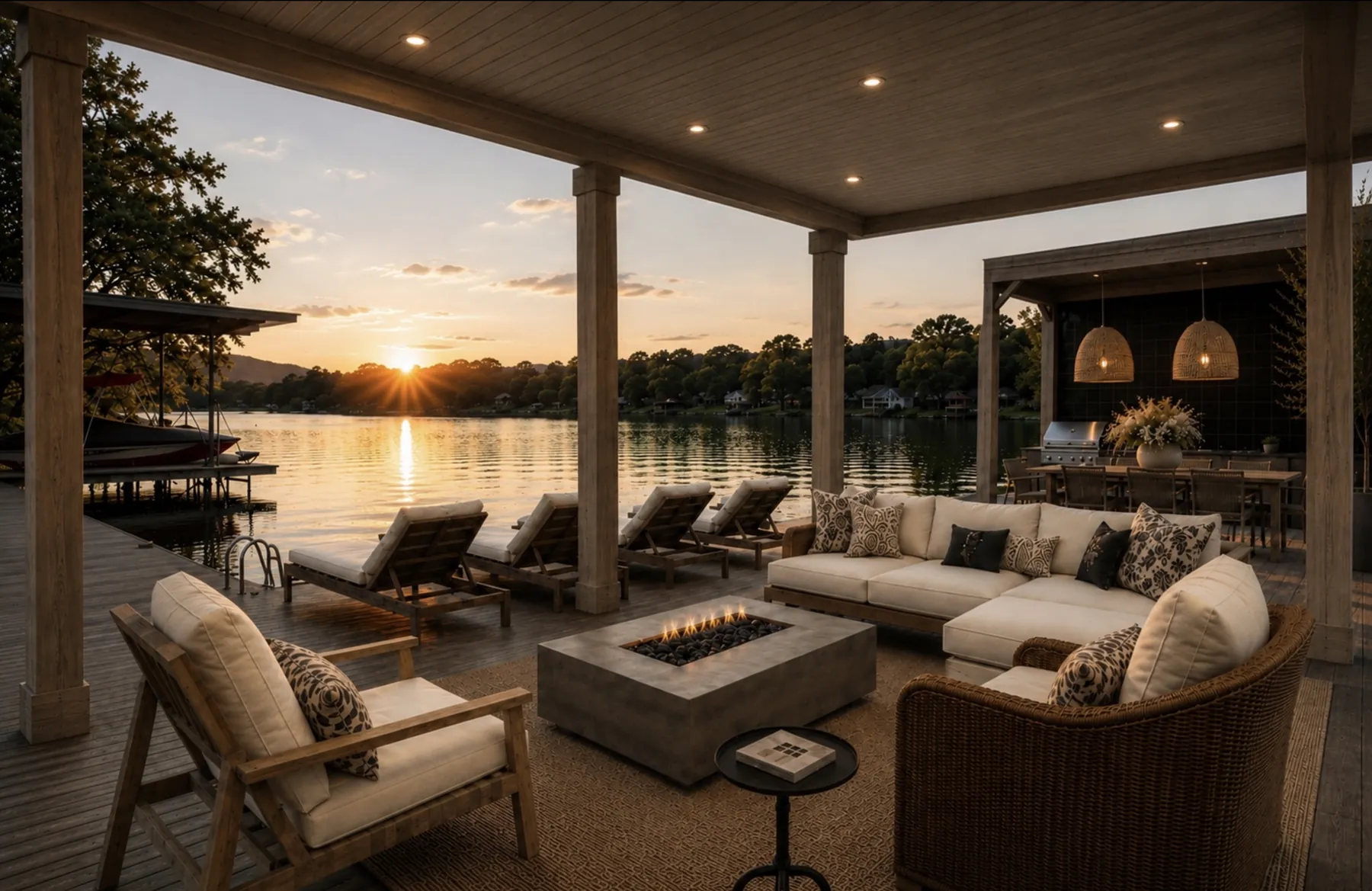
Motorized shades for west-facing glass on Lake Travis
Plenty of homes around Lakeway, Spicewood and Horseshoe Bay face west toward the water. The afternoon sun drops under the overhang and bounces off the lake, and the room heats up fast while floors and upholstery take a beating. A strong starting point for that glass is a motorized solar shade at 3 or 5 percent openness on a sun schedule, with an app and a wall remote. See finished rooms in the window treatment portfolio, and the full guide in motorized shades for west facing lake views.
What drives the cost of motorized shades
Motorized shades start at $399 a window, and the gap over a cordless shade depends on the opening. What moves the number:
- Size. Wide and tall shades need stronger motors and heavier tubes, and oversized sliders can need two shades side by side.
- Shade type and fabric. A solar roller, a lined linen Roman and a woven wood are priced differently before the motor goes in.
- Power. Battery and rechargeable motors add no electrical work. Hardwired motors add an electrician, and that cost depends on how open the walls are.
- Controls. Remotes and wall keypads per room, and a hub if you want the app, voice and schedules.
- Mounting. Inside the window, outside it, in a fascia or cassette, or hidden in a ceiling pocket.
- Number of windows. A whole house order gets grouped and planned together.
Every window is quoted in writing as its own line, so you can see what a hardwired shade on the great room slider costs next to a battery shade in the guest room. For the full cost picture and when the motor is worth it, read are motorized shades worth it.
Tall glass or too many windows to pull by hand?
Book a shade consultationHow to plan motorized shades
River Jane & Co. is an interior design studio, so each shade gets chosen for the room it sits in as well as the window it covers. The order of decisions is the same for one room or a whole house.
- 01
Start with the windows that need it
Tall glass, hard to reach windows and west exposures come first. A small window you can reach easily may be happier cordless, from $299.
- 02
Pick shade type, fabric and openness
Roller or Roman, then the fabric. For solar rollers, choose openness and color with samples held in the glass at the worst hour of sun.
- 03
Choose power and controls
Battery, rechargeable or hardwired for each window, then remotes, wall keypads and a hub if you want the app, voice and schedules. Hardwired motors need an electrician.
- 04
Get it quoted in writing
Every window is quoted in writing, line by line, with shade, fabric, power and controls listed before anything is ordered.
On a new build, ask your builder about ceiling pockets, blocking and wiring before drywall. Adding them later is a much bigger job. In a finished home, battery or rechargeable motors skip the wiring entirely. Either way, measure the window depth and check what you'd be mounting into before you settle on an inside mount. If you're working on the rooms too, the shades can be planned inside a Design Strategy so fabric and color get decided with everything else.
Motorized shades in Austin and Lake Travis
River Jane & Co. is based in Spicewood and works within about 28 miles of the studio, with Austin included on the same terms. That covers Lakeway and the rest of Lake Travis, Bee Cave, West Lake Hills, Horseshoe Bay, Marble Falls and Austin. See the full list of areas, and every shade at The Shade Haus.