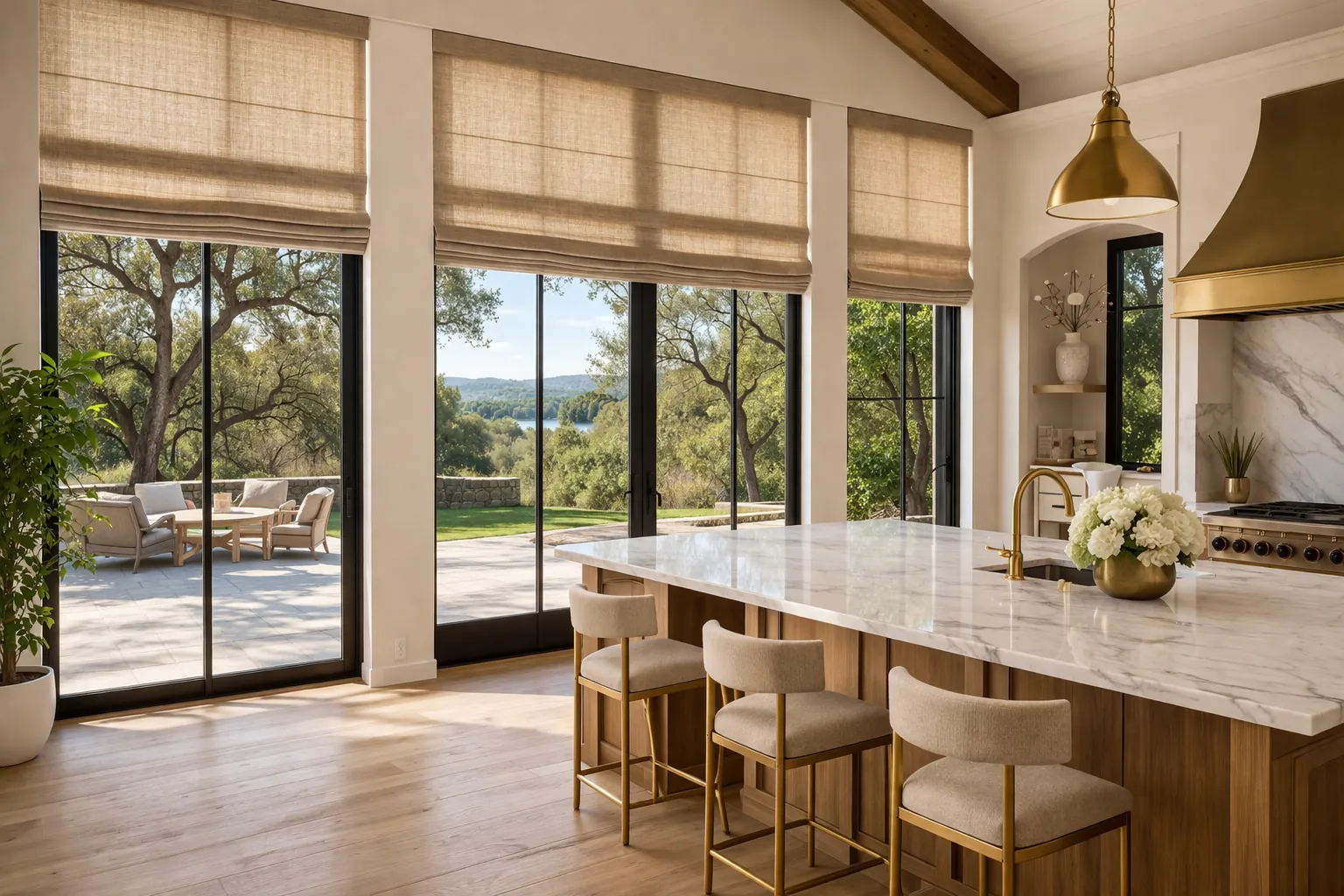
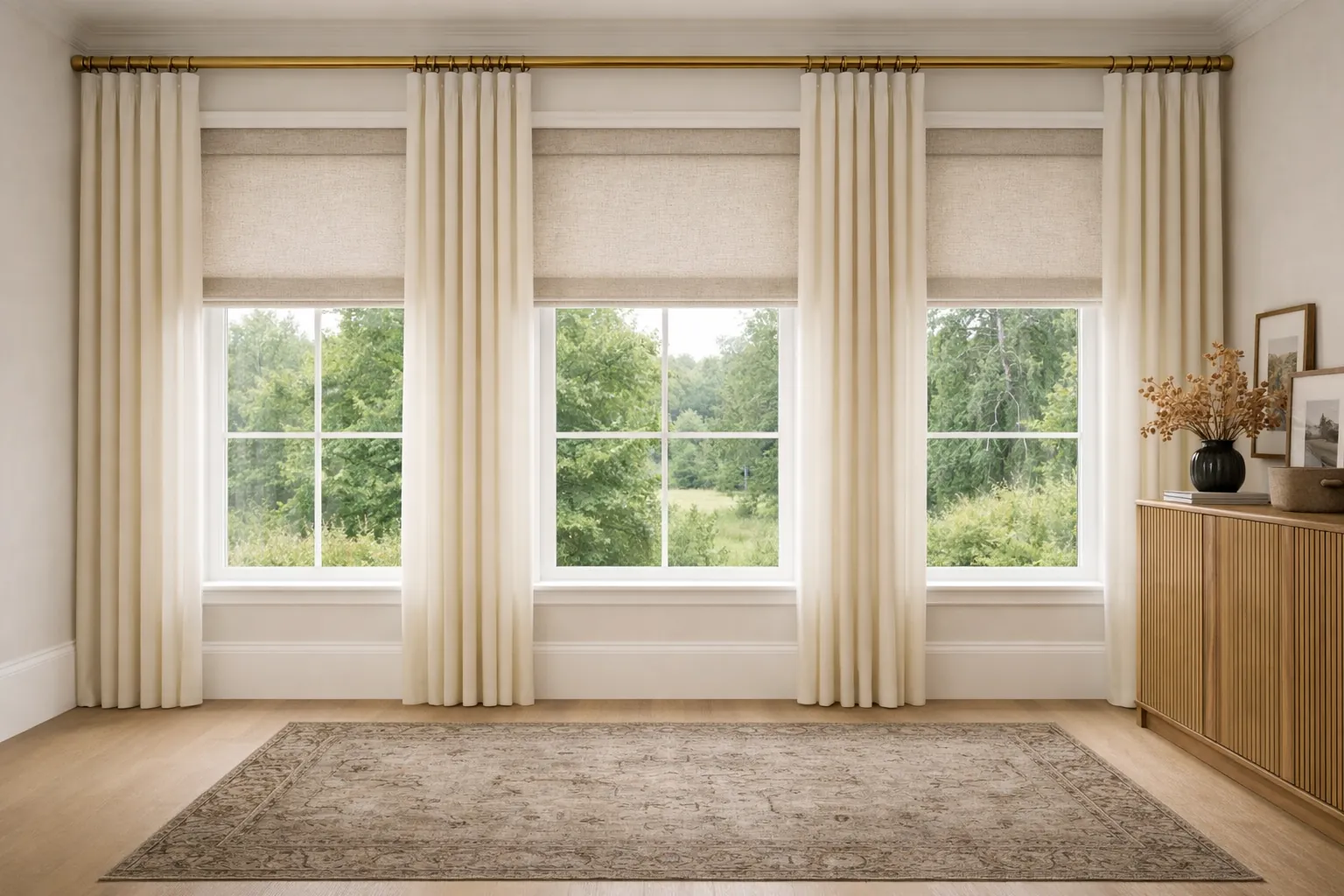
Roman shades are fabric shades that lift into soft, stacked folds. They're the warmest way to dress a window without drapery. The Shade Haus is River Jane & Co.'s shade line, with custom Roman shades for homes in Austin, Lake Travis and the Hill Country. Cordless Romans start at $299 a window and motorized Romans at $399, depending on fabric and controls. It starts with a free 15 minute call, and every window is quoted in writing before anything is ordered.
River Jane & Co. is an interior design studio first, so a Roman gets picked like any other fabric in the room. There are four calls to make: fold, lining, fabric and control. They go in about that order.
Flat, hobbled and relaxed Roman shades
The fold sets the tone of the room, so decide it first.
- Flat fold. Lies flat when it's down and stacks in crisp pleats when it's up. Tailored and the most versatile. Pick flat for modern Hill Country houses, for patterns that should read without a break, and for kitchens that want a clean line.
- Hobbled. Soft loops of fabric run the full length of the shade, even when it's lowered. More traditional, and it takes more fabric, so it costs more. Lovely in a bedroom or dining room that can carry some softness.
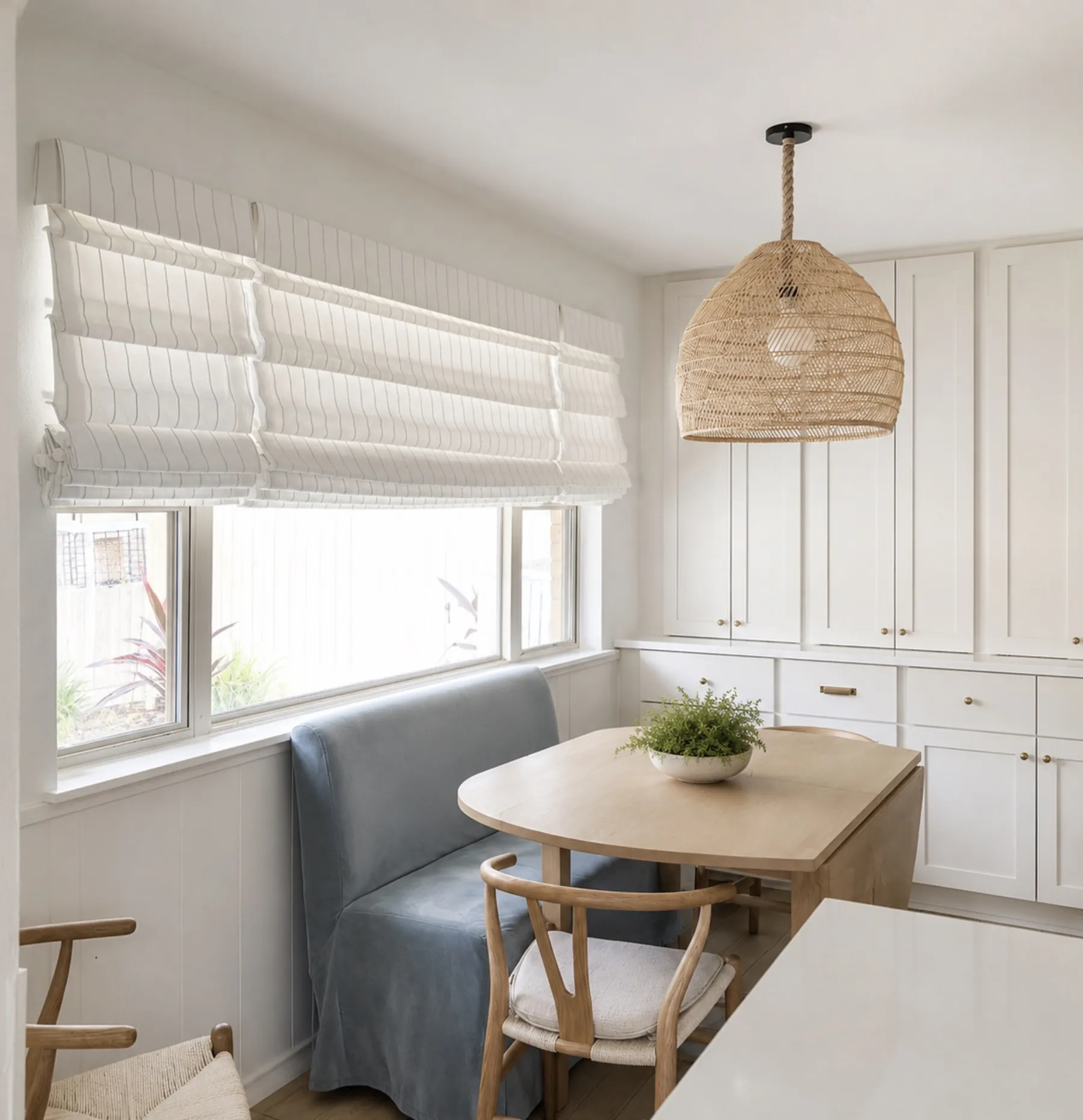
- Relaxed. A flat shade with a gentle curve at the bottom edge, sometimes called a European Roman. Casual and easy. Keep it to narrower windows. On a wide one, the curve starts to look like a sag.
After the fold come the details: the hem, any contrast banding and the mount. An inside mount shows off a deep limestone or plaster return. An outside mount covers more of the frame, blocks more light at the edges and, hung high, makes a short window look taller.
Cordless Roman shades
Cordless is the default for good reason. There are no pull cords on the front or side. A spring or tension system in the headrail holds the shade wherever you leave it, and you raise or lower it by the bottom rail with one hand. The window looks cleaner, nothing tangles, and it's safer around kids and pets. The U.S. Consumer Product Safety Commission recommends cordless window coverings in any home with young children.
Cordless works best on windows you can reach without a stretch. On tall windows, high transoms or very wide shades, lifting by hand gets awkward, and that's where a motor earns its keep. The cordless Roman shades guide goes deeper.
Roman shade linings and blackout
The lining changes how the shade looks from inside and from the street, how much light gets through and how long the fabric holds up in Texas sun.
- Unlined. Light glows through the fabric. Pretty in a kitchen, or in a bath with frosted glass. Little privacy at night.
- Privacy lining. Blocks the view in, gives the folds more body and protects the face fabric from fading.
- Blackout lining. For bedrooms, nurseries and media rooms. Every Roman lets a little light slip around its edges, so for a really dark bedroom, mount outside the frame and overlap the opening by a couple of inches on each side.
- Interlining. An extra layer between the fabric and the lining for a fuller fold and a bit of insulation.
On west-facing glass, line it. Afternoon sun is rough on linen and cotton, and a lining keeps the room side of the fabric looking right for years longer.
Roman shades for kitchens and bathrooms
Kitchens and baths are where people want Romans most, and where the wrong fabric gives up first.
- Kitchens. Steam, grease and sun. Go with durable linen blends, cotton blends or performance fabrics that clean up well, and keep the shade well clear of the range. A woven wood Roman over the sink adds texture and filtered light.
- Baths. Humidity is the problem. Skip delicate natural fibers near the shower, pick fabrics and linings that handle moisture, and mount the shade out of the splash zone. In a really steamy bath, a moisture resistant roller shade is often the smarter pick.
- Living rooms and bedrooms. This is where full linen, textured weaves and big patterns get to shine. Lined linen Romans are in the window treatment portfolio.
Woven wood Roman shades
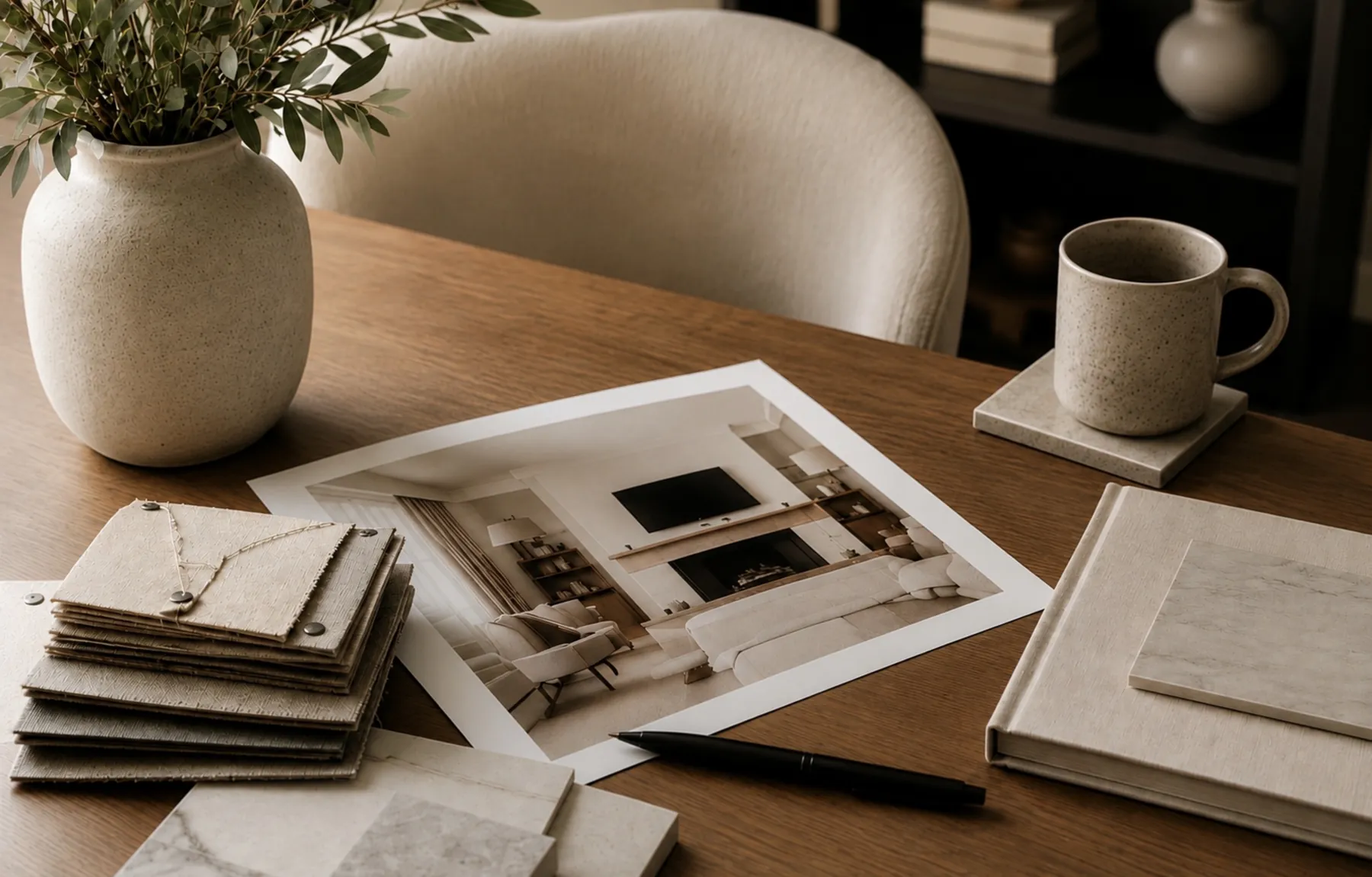
Woven woods are made from natural materials like bamboo, reeds, jute and grasses. They filter light, bring texture to white walls and warm up a room full of glass. They look right at the lake and in the Hill Country, next to limestone, white oak and plaster. Add a privacy or blackout liner if the room needs one, because an unlined woven wood shows silhouettes at night.
Since they're natural, no two are identical. Color and weave shift a little from batch to batch. That's part of the charm, and it's a good reason to order every shade in a room at the same time.
Motorized Roman shades
Romans can be motorized, depending on the fabric, the size and the product. The motor sits in the headrail and lifts the folds evenly, and it runs from a remote, a wall keypad, an app or a schedule. Power is battery, rechargeable or hardwired, and hardwired motors need an electrician to bring power to the window. Motorized Romans start at $399 a window. They make the most sense on tall windows, stair landings and rooms where every shade should move together. More on motorized shades in Austin.
Are Roman shades still in style?
Yes, and the look has gotten simpler. Flat folds, natural linens, soft whites and warm neutrals, woven woods and tone on tone banding all suit the relaxed, lived-in rooms going into Austin and Lake Travis homes now. Heavy swags and busy valances haven't come back. A well made Roman in a good fabric won't date fast. For more on keeping a lake house personal, read lake house decor that doesn't look like a theme.
How much do Roman shades cost?
Cordless Roman shades from The Shade Haus start at $299 a window, and motorized Romans at $399. What moves the price on a given window:
- Window size, and whether a very wide opening needs two shades.
- Fabric. A designer linen and a basic cotton aren't priced the same.
- Fold style. Hobbled folds use a lot more fabric than flat.
- Lining and interlining.
- Control: cordless or motorized, and for motors, the power and controls you choose.
- Trims and banding.
Every window is quoted in writing before anything is ordered, so you can trade a lining or a fabric against the total first.
Choosing Romans for a kitchen, bath or bedroom?
Book a shade consultationHow to choose Roman shades
- 01
Pick the fold and fabric
Flat, hobbled or relaxed first, then the fabric. Look at samples against the window at the time of day you use the room most. Linen can read a shade lighter with sun behind it.
- 02
Decide how much light to stop
Unlined, privacy, blackout or interlined. Bedrooms and media rooms want blackout. A kitchen window over the sink can go unlined and glow.
- 03
Choose the mount and control
Measure the window depth before you commit to an inside mount, since the headrail needs room to sit flush. Then go cordless on windows you can reach and motorized on the tall ones.
- 04
Get it quoted in writing
Every window is quoted in writing, with fabric, fold, lining, mount and control listed line by line, before anything is ordered. Swap a lining or a fabric and watch the total move before you commit.
A few mistakes worth dodging. Skipping the depth check on an inside mount leaves a headrail sticking out of a shallow window. Picking fabric from a tiny swatch under store lights is a gamble. Ordering one room's shades in two batches, especially woven woods, can leave two colors side by side. If you're redoing the whole room, the shades can be planned inside a Design Strategy, so the Roman fabric gets picked alongside the paint, upholstery and rug. The Shade Haus doesn't make drapery. Roman and roller shades are the whole focus.
Roman shades in Austin, Lake Travis and the Hill Country
River Jane & Co. is based in Spicewood and works within about 28 miles of the studio, with Austin included on the same terms. That covers west Austin, Lakeway and the rest of Lake Travis, Bee Cave, West Lake Hills, Spicewood, Horseshoe Bay and Marble Falls. Hill Country homes with deep window returns and lots of stone are a natural fit for an inside mounted Roman. See the full list of areas, and every shade at The Shade Haus.