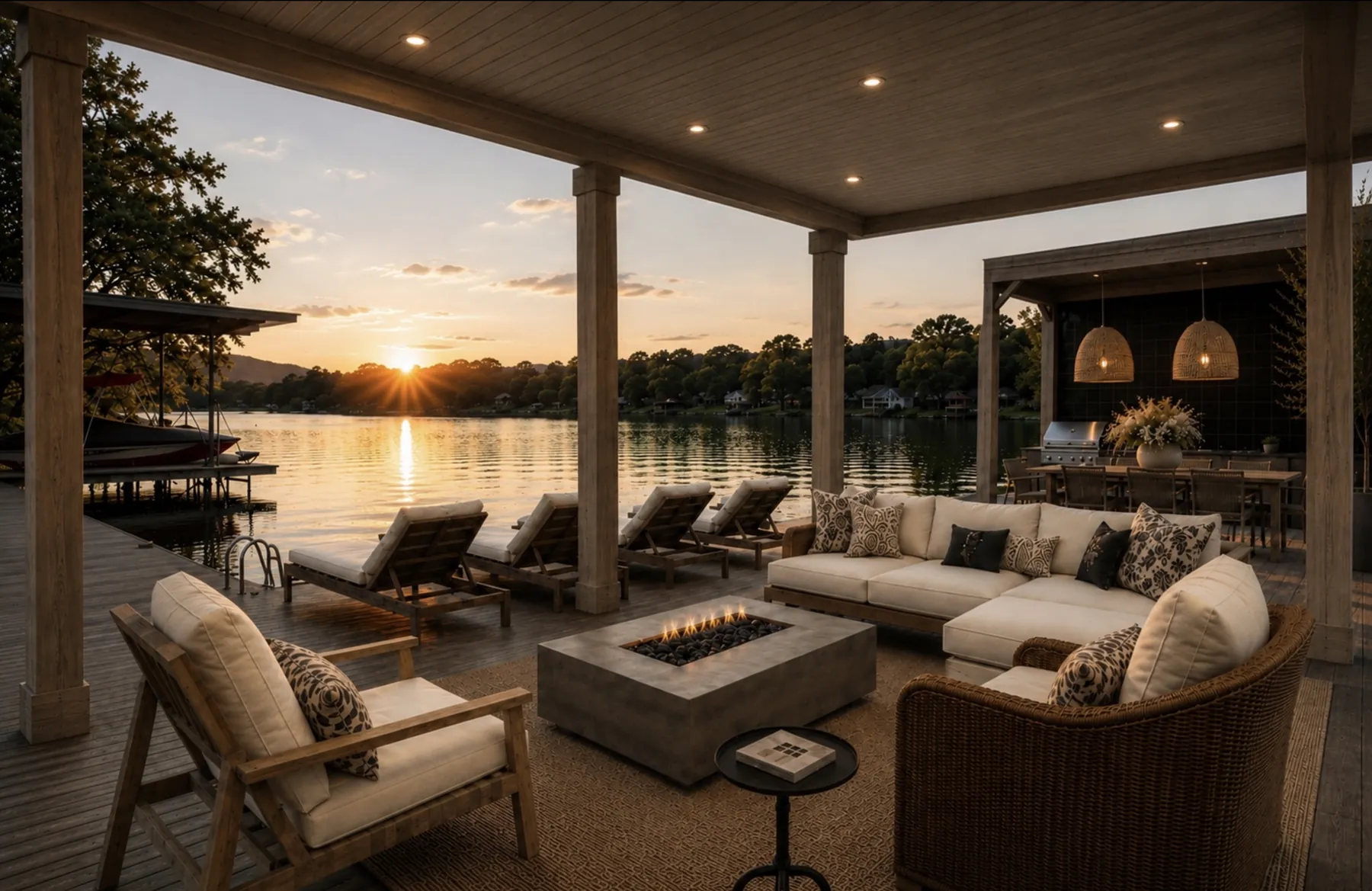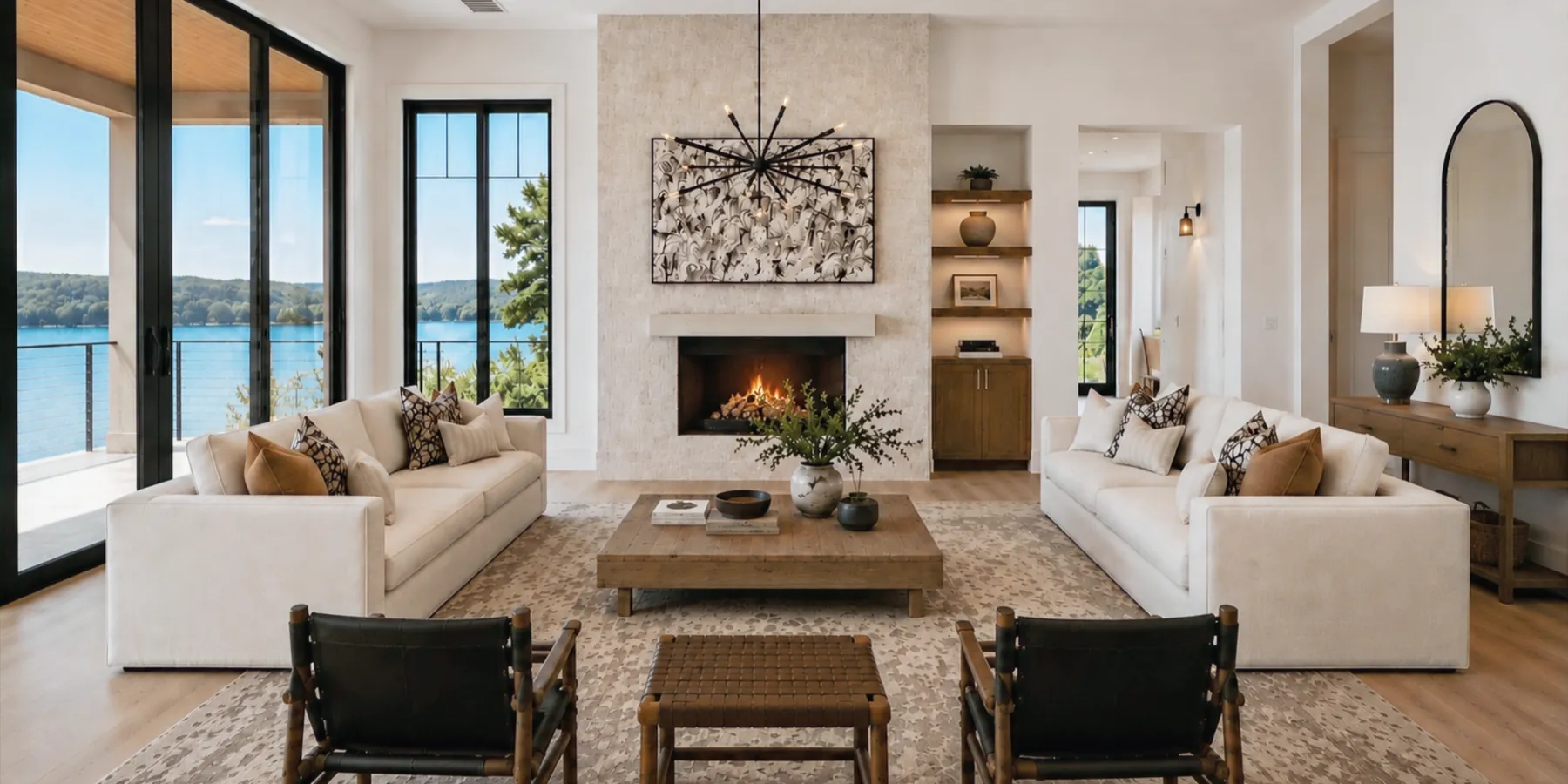
Motorized shades are worth it on tall or hard to reach windows, on west glass that needs sun control every afternoon, in rooms where several shades should move together, and in homes that sit empty for stretches. On a single small window you can reach from the floor, they rarely pay off. A cordless shade does that job for less. So skip the whole house yes or no and go window by window.
The Shade Haus is the shade line from River Jane & Co.: Roman and roller shades, cordless from $299 a window and motorized from $399 a window, depending on fabric and controls. Every window is quoted in writing, so you can see what a motor adds to each opening before you commit.
Where motorized shades earn their price
- Windows nobody can reach. Transoms, clerestories, two story great rooms, stair landings. Without a motor, those shades get set once and left there, usually in the wrong spot for half the day.
- West and south glass. The sun shows up at the same hour every day. A schedule lowers the shades before the room heats up and raises them after sunset, whether anyone's home or not. Around Lake Travis, the water throws afternoon glare right back into the room, which makes west glass the strongest case for a motor. More on that in motorized shades for west facing lake views.
- Rooms with lots of windows. Eight shades by hand is a lap around the room. With a motor it's one button.
- Big sliders and heavy shades. Very wide shades are heavy to lift and tricky to lower evenly. A motor handles the weight and stops level every time.
- Homes that sit empty. Weekend lake houses and second homes. Shades on a schedule keep the sun off floors, rugs and upholstery when nobody's there, and the house looks lived in from the street.
- Bedrooms and media rooms. Shades that open at 7am or close for a movie from the couch actually get used.
- Accessibility. For anyone who finds reaching, lifting or twisting hard, a remote or a voice command puts every window within reach.
Do you need an app, or is a remote enough?
Plenty of motorized homes never need an app. A handheld remote or a wall keypad by the door covers it: one press and the great room shades come down. It costs less, it's simpler to set up, and it keeps working when the Wi-Fi doesn't. Add a hub when you want schedules, control from your phone, or voice control. The hub is what runs a sun schedule, so on west glass it's often the piece that pays for itself. Most systems let you start with remotes and add a hub later. Confirm that before you pick a motor brand.
Where a cordless shade is the better buy
A powder room window. A small bedroom window beside the bed. The kitchen window over the sink. If you can reach a shade easily and move it once a day, cordless gives you the same fabric and the same look for less, with nothing to charge. Cordless shades from The Shade Haus start at $299 a window. A smart plan for most houses is a mix: motors on the tall and west facing glass, cordless everywhere else. Leaning toward Romans? The cordless Roman shades guide covers how they work.
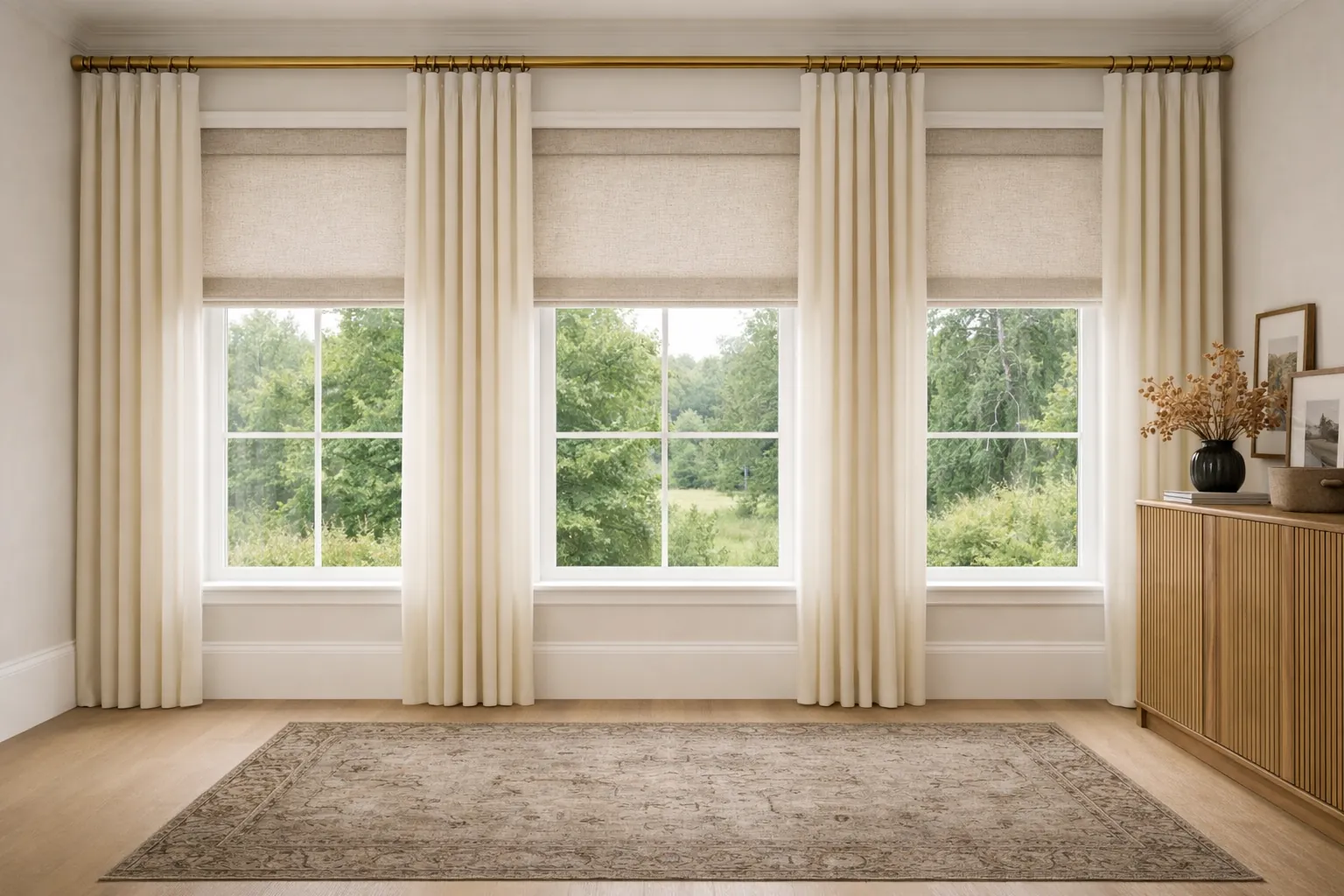
What drives the cost of motorized shades?
A motorized shade is a custom shade plus a motor, a power source and a way to control it. Each of those moves the price.
- The shade. Size, type and fabric come first. A solar roller and a lined linen Roman are priced differently before a motor is ever added.
- The motor. Bigger, heavier shades need stronger motors, and low noise motors cost more.
- Power. Battery and rechargeable motors need no electrical work. Hardwired motors need an electrician to run power to each window, which is easy with open walls and a bigger job in a finished room.
- Controls. A remote or keypad per room, plus a hub if you want the app, voice and schedules. One hub usually covers every shade in the house.
- Mounting. Inside or outside mount, a fascia or cassette to hide the roll, or a ceiling pocket that has to be built.
- Setup and programming. Setting top and bottom limits, pairing remotes, grouping rooms and building schedules. Done well, you never think about it again. Done badly, shades stop crooked and schedules drift.
At The Shade Haus, motorized shades start at $399 a window. Where yours lands depends mostly on the fabric and the controls you choose.
Battery or hardwired motorized shades?
In an existing home, battery or rechargeable motors are usually the right call. No electrician, no patching, no paint touch ups. The tradeoff is recharging or swapping batteries every so often, depending on the size of the shade and how often it moves.
In a new build or a big remodel, hardwire the large windows while the walls are open. It costs far less than fishing wire through finished walls later, and there's nothing to charge, ever. Even if you're unsure you'll motorize every window on move in day, run the wire and frame the pockets before drywall. Wire sitting in a wall is cheap. Opening a finished wall is expensive.
The costs people forget
- The electrician, for hardwired motors in a finished home.
- A hub, if you want the app, voice and schedules. Remotes work without one.
- Pockets and blocking, built by your contractor on a new build.
- Batteries, replaced or recharged over the life of the shade.
- Service, if a motor needs reprogramming after a router change or a power surge. Ask who handles that before you buy.
What you get back
It's hard to put a number on, but it's real. Shades that drop on schedule protect floors, rugs, art and upholstery from Texas sun. A room that's comfortable at 5pm in July gets used. Cordless and motorized shades both get rid of dangling cords, and the Consumer Product Safety Commission recommends cordless window coverings in any home with young children. And shades that move on their own actually move. Manual shades on tall windows tend to stay parked.
Want to know which of your windows are worth a motor?
Book a shade consultationWhat The Shade Haus charges
Cordless shades start at $299 a window. Motorized shades start at $399 a window, depending on fabric and controls. Every window is quoted in writing, line by line, with the shade, fabric, motor, power and controls spelled out, so you can put motors on the glass that needs them and keep the rest cordless. It starts with a free 15 minute call, then a consultation, in your home or virtual.
A simple way to decide
- Can you reach the shade comfortably from the floor? If not, motorize it.
- Does the window face west or south with direct sun? A schedule is worth paying for.
- More than three or four shades in one room? Group them on motors.
- House empty for days at a time? Motorize the sunniest rooms first.
- Everything else: cordless, and spend the difference on better fabric.
Questions to ask before you buy motorized shades
- Which motor brand is it, and does it work with the hub or smart home system you already have?
- Battery, rechargeable or hardwired for each window, and why that one?
- What's the warranty on the motor, and is it different from the warranty on the fabric?
- Who do you call if a shade needs reprogramming?
- Can you add a hub or voice control later without replacing the motors?
Motorized shades around Lake Travis and Austin
The Shade Haus works with homes within about 28 miles of the River Jane & Co. studio in Spicewood, including Lakeway, Bee Cave, West Lake Hills, Horseshoe Bay, Marble Falls and Austin. For the options in detail, see motorized shades in Austin and roller and solar shades.