The cost to furnish a house comes down to a few decisions: how many rooms you furnish at once, the quality level you buy at, how much is custom, and how much of what you own comes along. Square footage matters less than people expect. A big open great room can need fewer pieces than two small guest rooms.
So skip the per square foot figure. Any number like that is a guess about a house nobody has walked. The useful answer is a room by room list with every piece on it, priced against that list. A Design Strategy, from $999 per room, gives you the layout and the selections, so the list is worth pricing.
What drives the cost to furnish a house?
- Number of rooms. Count every space that needs furniture. A three bedroom house with a great room, dining area, office and porch has far more rooms than the bedroom count suggests, and most of them need rugs, lighting and window treatments too.
- Quality level. Retail pieces off the floor, to the trade lines ordered through a designer, and custom pieces built to size sit at very different price points, even for the same kind of sofa.
- Custom work. Custom upholstery, built-ins, made to measure rugs and custom shades cost more and take longer. They're also often the pieces that make an awkward room fit.
- What you keep. Every good piece you bring from the last house is one less to buy. Measure them before you plan anything.
- Upholstery and big rugs. In the living spaces, the sofa, the sectional and the large rugs tend to be the biggest line items.
- Window treatments. A house with a lot of glass has a lot of windows to cover. It's the line most first budgets forget.
- Your deadline. Furnishing everything by one date limits you to what's in stock. Giving made to order pieces time opens up better options.
Where to spend and where to save
Put the money into the pieces that get used every day. Those show wear first, so that's where quality pays you back.
Spend on:
- The sofa or sectional in the room everyone lands in.
- Mattresses.
- Dining chairs and counter stools, which get pulled out, leaned on and dragged every single day.
- Large rugs in the main rooms, with good pads under them.
- Shades on west and south glass. Sun fades fabric, rugs and wood floors faster than wear does.
- Performance fabric on anything people sit on after a day on the water.
Save on:
- Accessories and decor you'll swap out in a few years.
- Trend pieces, like the accent chair in this year's color.
- Guest room dressers and nightstands that see a few nights a month.
- Small side tables and table lamps, where a lower price point rarely shows.
A good rule: if you'll touch it daily, buy up. If you'll mostly look at it, buy what you love at a price you won't mind replacing.
What to buy first
Order matters as much as budget. Buying out of sequence is how you end up with a rug that fights the sofa or a dining table that's too long for the room.
- Measure and plan the rooms. Draw each room to scale with the furniture in it. That sets the size of every piece before you shop.
- Order the slow pieces. Custom upholstery, dining tables, beds and anything made to order. They take the longest, so they go first.
- Choose rugs. Once the layout is set, rug sizes follow. Pick them before small tables so the tables fit the rug.
- Measure for window treatments. Wait until flooring and trim are done, and check the window depth before you choose an inside mount.
- Add lighting. Lamps and fixtures, sized to the furniture they sit beside or hang over.
- Fill in occasional pieces. Side tables, benches, the chair for that empty corner.
- Finish with art, mirrors and accessories. They're easiest to choose once the room exists.
How long it takes to furnish a house
Lead times swing a lot depending on where a piece comes from. In stock retail can arrive quickly. Trade lines and made to order upholstery take much longer, and fully custom work longer still. Freight for large pieces adds time on top, and homes tucked out on the lake can be slower to reach.
You've got two good ways to handle it. Plan early so the made to order pieces have room on the calendar, or furnish in phases and let the slow pieces land later. Rushing everything to one move in date is the fastest way to end up with only what happened to be in stock.
Plan it room by room
A budget you can keep starts as a list. Walk the house, write down every piece each room needs, then price the list. Use this as your starting checklist.
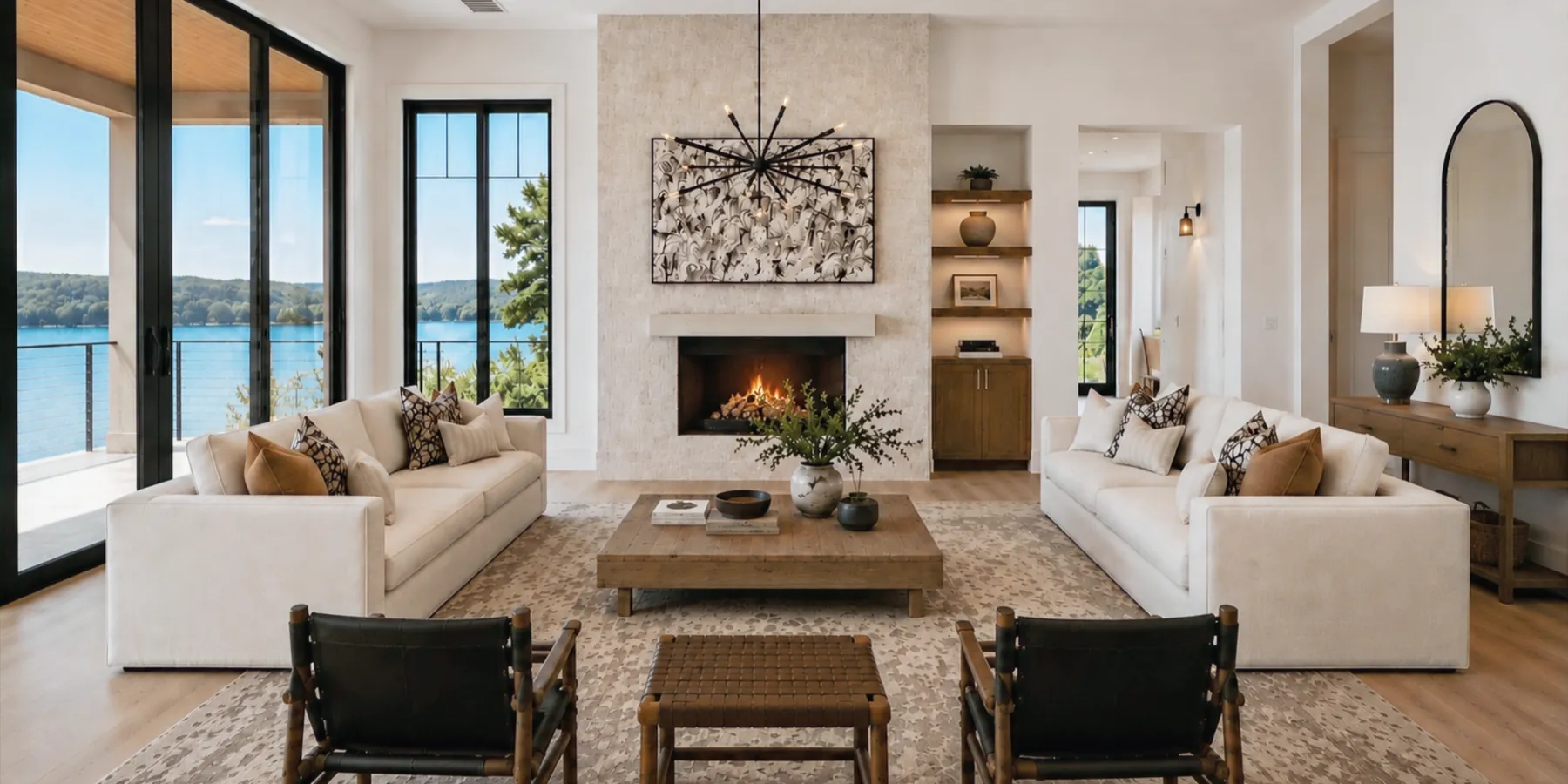
Great room or living room. Sofa or sectional, two to four chairs, a coffee table, side tables, a large rug with a pad, lamps, a media piece if the TV isn't built in, and window treatments. In a tall room with a lot of glass, every piece has to scale up, and so does the price.
Dining. Table, chairs, a rug if the floor calls for one, a chandelier or pendant centered on the table, and a sideboard for serving and storage.
Kitchen and breakfast nook. Counter or bar stools sized to the island height, a nook table and seating, and a shade for the sink window. Stools get used constantly, so buy them well.
Primary bedroom. Bed frame, mattress, nightstands, lamps or sconces, a dresser, a bench or chair, a rug, bedding, and room darkening shades if the room gets morning or late sun.
Guest rooms and bunk rooms. Beds, mattresses, nightstands, lamps, a spot for a suitcase, and a lot of bedding. Lake houses often need more sleeping than they have bedrooms.
Office. Desk, a chair you can sit in all day, storage, a task light, and something to cut glare on the screen.
Entry, halls and laundry. A console or bench, a mirror, runners, hooks and storage. Small stuff, but it adds up across a whole house.
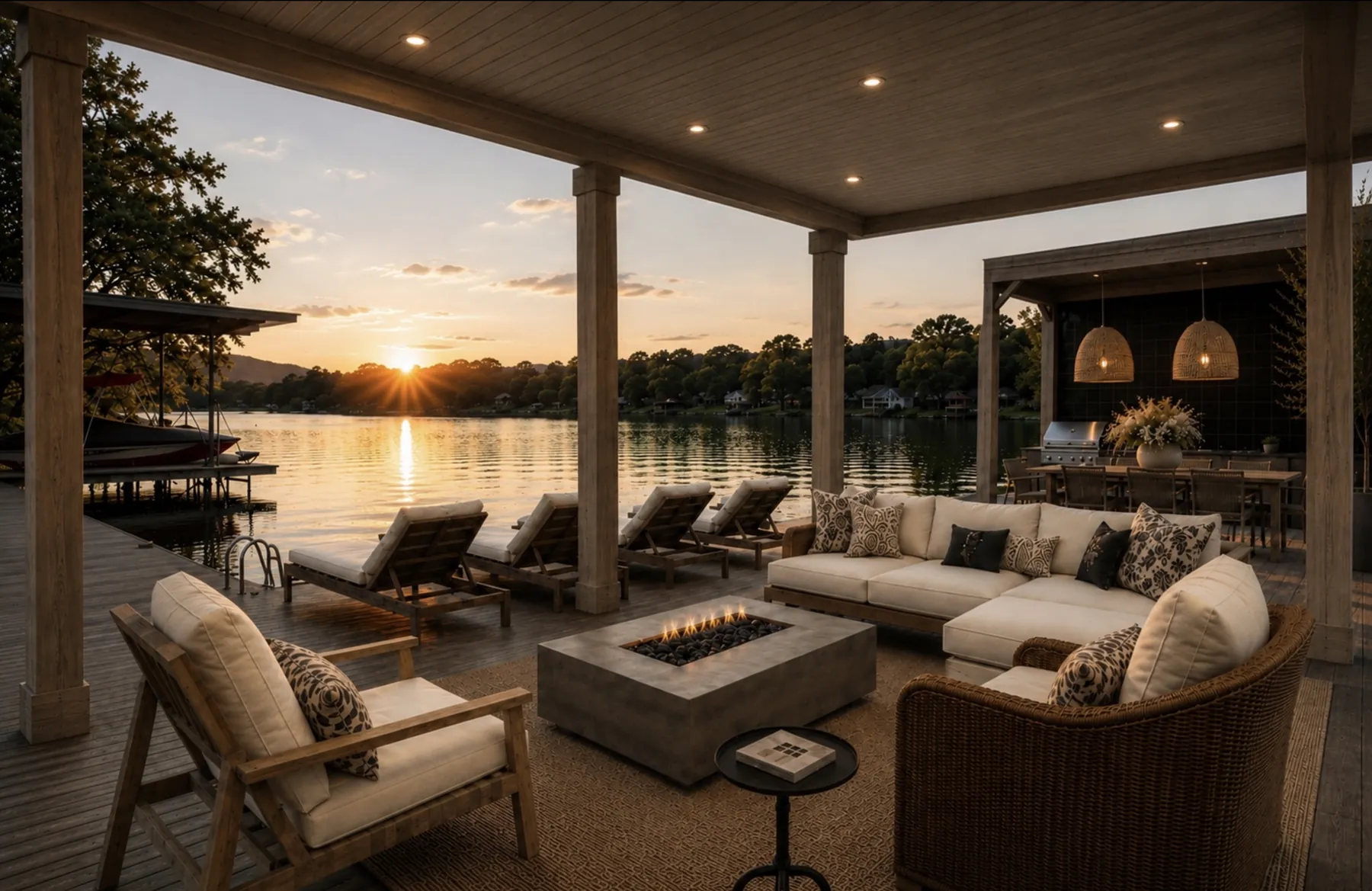
Porches and outdoor rooms. Outdoor seating, dining, cushions in outdoor fabric and outdoor rugs. Around the lake these rooms get as much use as the living room.
Where lake homes spend differently
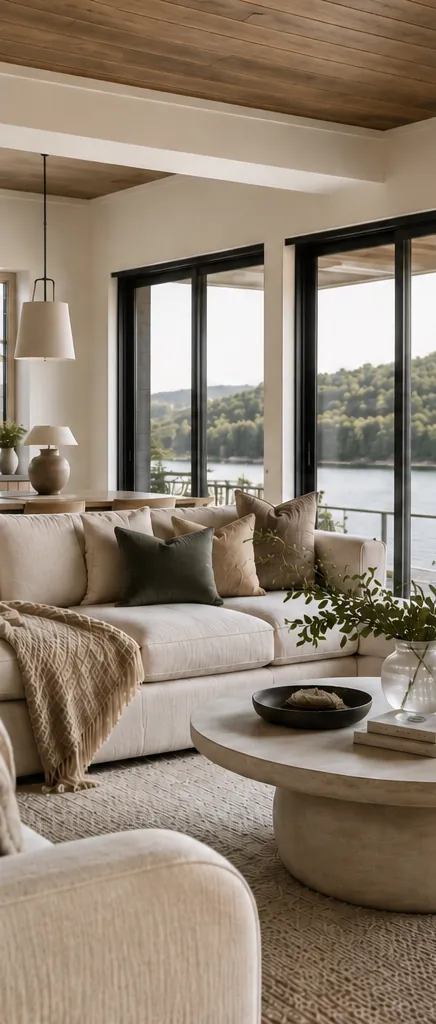
A house on or near Lake Travis works harder than most. West facing glass, wet swimsuits, sunscreen, dogs and a full house on holiday weekends all change what you should buy.
- Performance fabric on seating. It costs more up front and saves you reupholstering later.
- Window treatments on west glass, early in the budget. A room that's blinding at 5pm doesn't get used. Read motorized shades for west facing lake views.
- Outdoor furniture as its own line item. A porch that seats ten is a room.
- Sleeping capacity. Bunk rooms and sleeper sofas cost more than a guest room with one bed, and they're what lets a lake house hold everyone.
- Less on trend pieces. Decor you'll change in a few years is the easiest place to save. Our guide to lake house decor covers what lasts.
For the design side, including glare, humidity and fabric choices, see designing a lake house on Lake Travis.
The costs people forget
Budgets that go over usually weren't wrong about the sofa. They left out everything around it.
- Freight and delivery. Large pieces ship by freight, and many lines charge extra to bring them into the room.
- Storage and timing. Pieces ship on different schedules. If the house isn't ready, you'll need somewhere to hold them.
- Sales tax. Texas charges sales tax on furniture. Put it in the budget from day one.
- Rug pads, lamps and bulbs. Small, and needed in almost every room.
- Bedding and towels for every bed and bath, doubled if it's a rental or a guest heavy house.
- Art and mirrors, plus the hardware and time to hang them.
- Window treatments, which tend to come in higher than people guess once every opening is counted.
Moving in or building new
Your starting point changes the budget. Moving from another house, a lot of what you own may come with you, and the work is deciding what fits the new rooms and what the new house needs that the old one didn't. A lake house often has more glass, more outdoor space and more guests than the last place, so the gaps are predictable. Furnishing a new build or a second home from scratch, every piece is new, and the plan matters even more because there's nothing to fall back on.
How to build a furnishing budget you can keep
- Inventory what you have. Measure the pieces you're keeping and decide where each one goes.
- Draw the rooms. A furniture plan to scale tells you the size of every piece before you shop, so you're not returning a sectional that blocks a door.
- List every piece. Room by room, including rugs, lighting, shades, bedding and outdoor.
- Choose where to spend. Upholstery, dining chairs, mattresses, main rugs, stools and shades on west glass.
- Price the list. Get quotes against the actual list, with freight, delivery and tax included.
- Decide on phases. If the total is more than you want to spend at once, furnish the rooms you use most first.
Furnishing in phases
You don't have to furnish a whole house at once. A sensible order is the great room, kitchen seating and primary bedroom first, since those get used every day, then guest rooms, the office and outdoor spaces. The trick is to plan the whole house up front, even if you buy it in stages. Skip that and phase two ends up matching nothing from phase one.
When the rooms are designed together, phase two drops in right where phase one left off. See whole home interior design for planning a full house, or new build interior design if the house is still under construction.
What we charge
Our pricing is simple and in writing:
- First call
- Free, 15 minutes
- Consultation
- About an hour, in your home or virtual, depending on the project
- Design Strategy
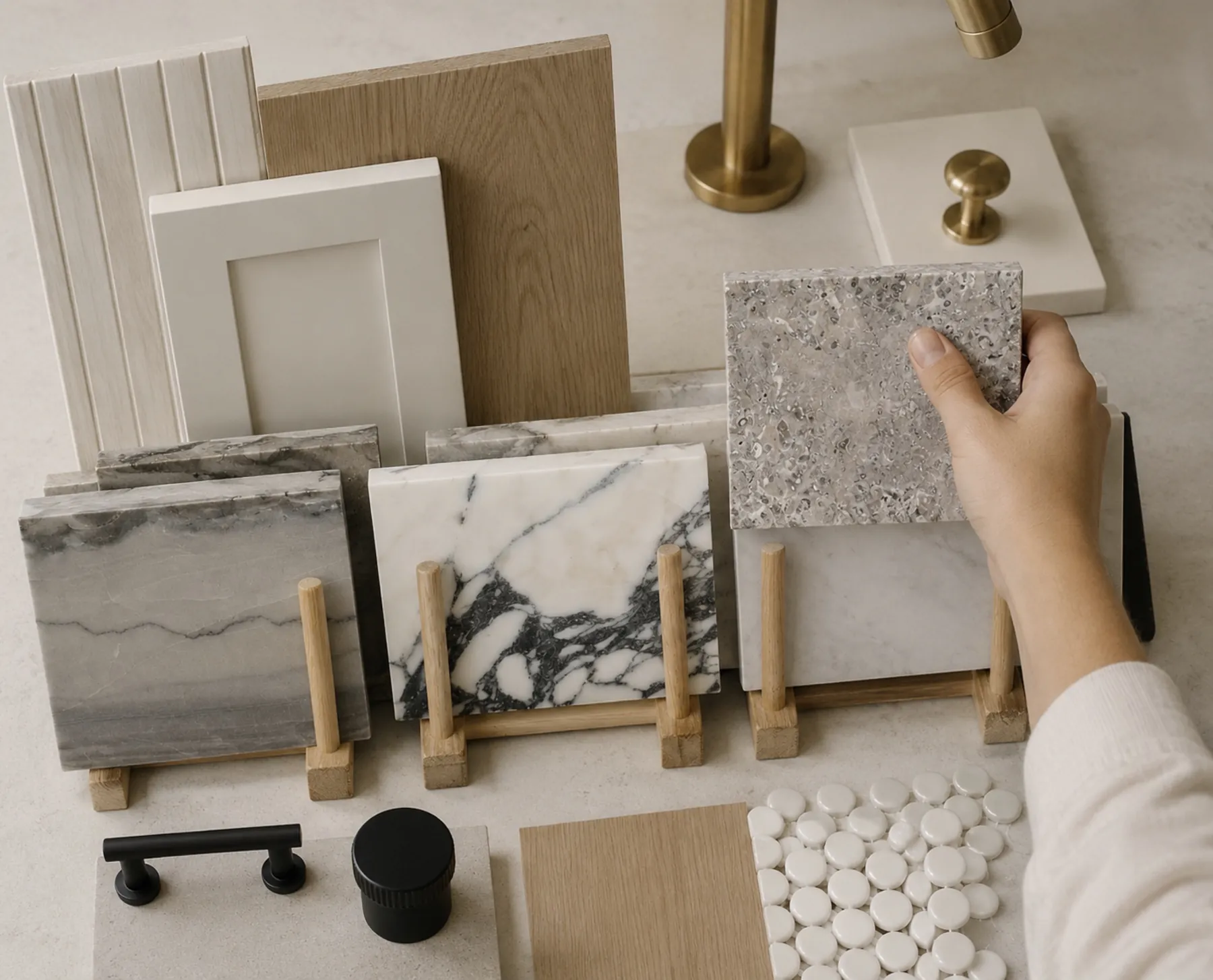
- From $999 per room or space, and whole homes are quoted after your consultation: layout, selections, mood board and 3D rendering, a 30 minute review call and a final visit with samples
- Full design and project services
- Quoted from your approved Design Strategy
A Design Strategy is priced per room and covers the layout, selections, a mood board, a 3D rendering, a 30 minute review call and a final visit with samples. A whole home or several rooms is quoted after the consultation. Window treatments come from The Shade Haus: cordless shades from $299 a window and motorized from $399 a window, depending on fabric and controls. For how design fees work across the industry, read how interior designers charge and what an interior designer costs around Lake Travis.
Want a number for your own house?
Book a 15 minute call