A house on Lake Travis has three things working against its interior: afternoon sun that comes off the water as well as the sky, humidity that settles into a house left closed for a week, and a steady stream of people with wet feet and sunscreen. The view is why you bought the place. The interior's job is to let you enjoy it at 5pm in August.
Plan it in this order.
Start with the light
Plenty of lake houses look west across the water. West light comes in low and hot in the afternoon, and the lake bounces it back into the room at an angle ordinary overhangs don't stop. It fades rugs, wood floors, upholstery and art faster than the light in a north facing room.
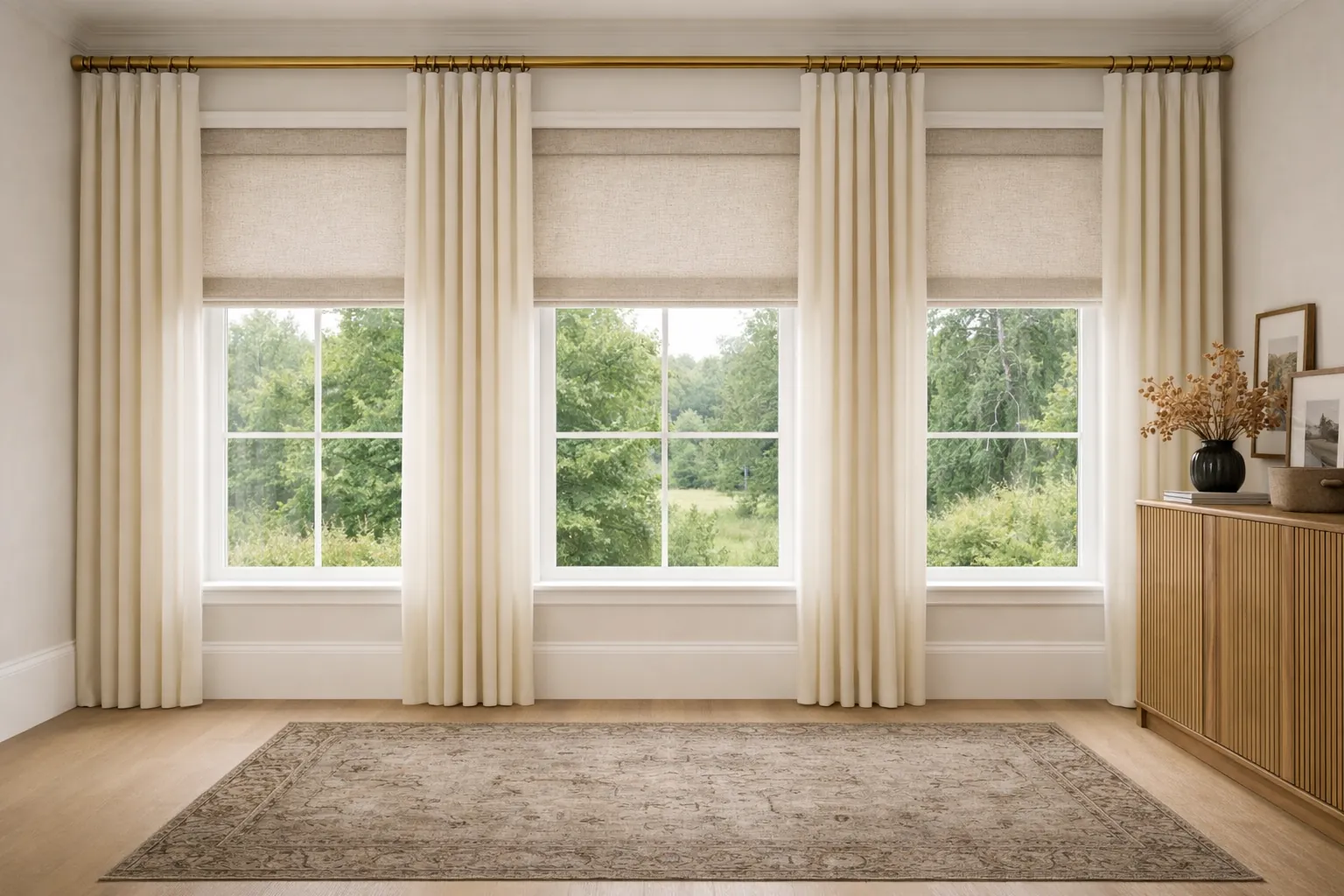
So settle window treatments first. Work out which openings need roller shades in a solar fabric, which need Roman shades and which need nothing, because that answer changes where the furniture and art can go. More in motorized shades for west facing lake views.
- Put the television on a wall that doesn't face the glass, or plan a shade for the hours you watch it.
- Hang art and photographs on solid walls, out of direct afternoon sun.
- Put the reading chair where the light is good at 10am. By 5pm the west side of the room will be blinding.
Glare is a layout problem too
Glare bounces off surfaces inside the room as much as it pours through the window. Polished stone, high gloss cabinets, lacquered tables and glossy tile all throw the sun around. Near the lake, honed stone, matte white oak, plaster and lime wash are safer bets because they soften the light.
Seating matters as well. A sofa that stares straight into the sunset is a sofa nobody uses in July. A good rule is to set the main seating across the view, so you can turn toward it, with a second group facing into the room.
Humidity and the house that sits closed
Hill Country humidity is hard on a house that's shut up between weekends. Wood moves, fabric can smell musty, and anything stored damp stays damp. The first defense belongs to your builder and HVAC contractor: humidity control that runs when nobody's home. The second is material choice.
- Wood. Wide plank white oak with a matte finish handles seasonal movement and hides wear well. Let flooring and millwork sit in the house and acclimate before it goes down.
- Metals. Unlacquered brass will patina near the water. Use it where you want that look, and pick a sealed finish where you don't.
- Storage. Towels, life jackets and pool floats need ventilated storage near the door. A closet in the middle of the house will stay damp.
Fabrics that survive the lake
This is where lake houses most often go wrong. A white linen sofa looks beautiful in photos and lasts one summer. Indoors, choose performance fabrics for anything people sit on in a swimsuit: solution dyed acrylics and performance blends that feel like linen or boucle and clean up with water. Slipcovers on dining chairs and the family sofa can go in the wash at the end of the season.
On covered porches, use true outdoor fabric for cushions and pillows. Wool rugs are lovely in bedrooms and dens. At the doors to the deck and dock, use indoor and outdoor rugs you can hose off. Heathered and mid tone colors hide more than solid whites or darks.
Planning a lake house?
Book a 15 minute callHard finishes that look better at year five
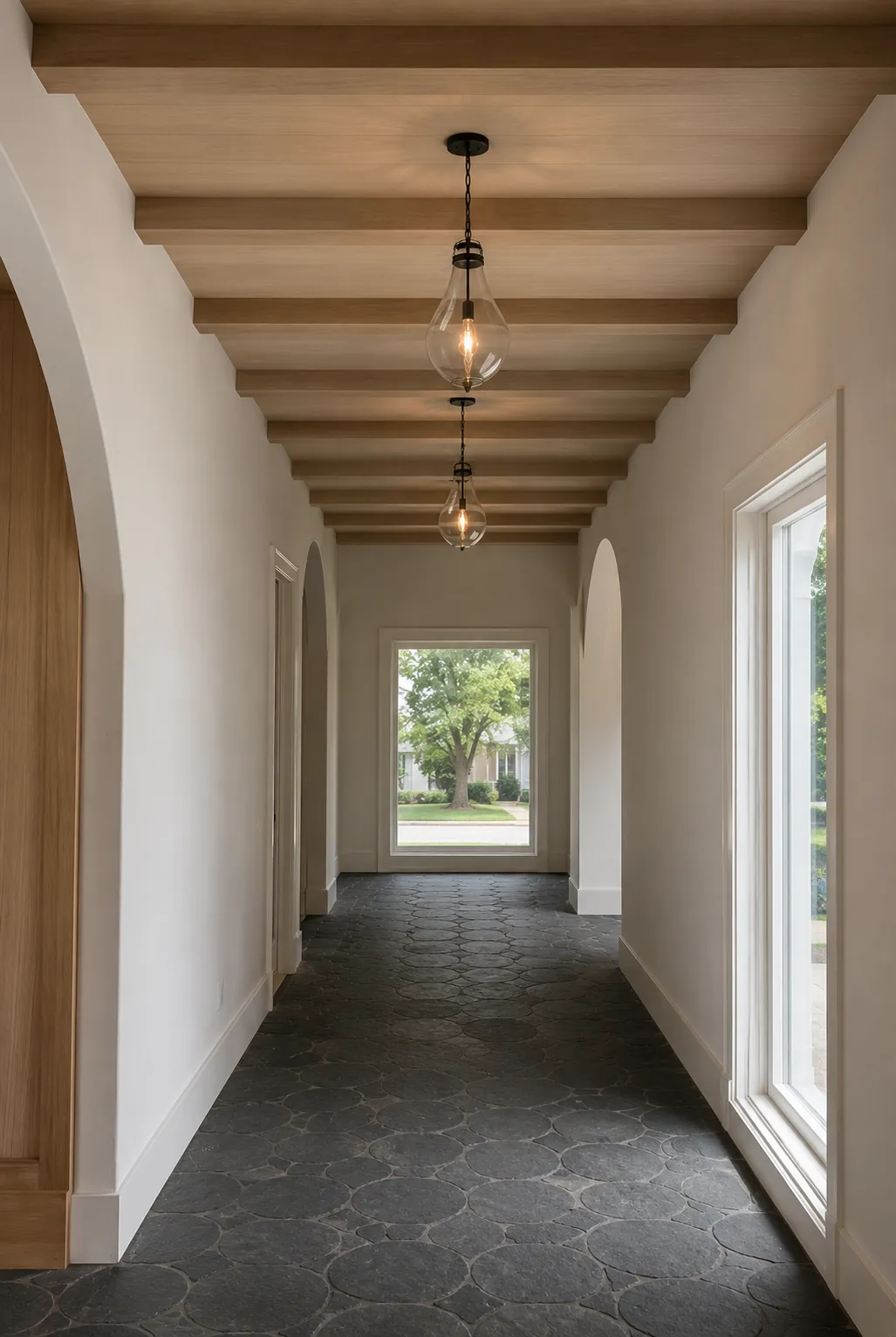
Honed quartzite or native limestone for counters and floors, sealed and resealed on schedule. Textured tile at the entry from the dock so wet feet don't slip. A mudroom or boat room with hooks, a bench and a place to rinse, plus a dog wash if you have dogs. And grout a shade darker than you think, because wet feet and Hill Country dirt will find it.
Modern lake house interiors that stay warm
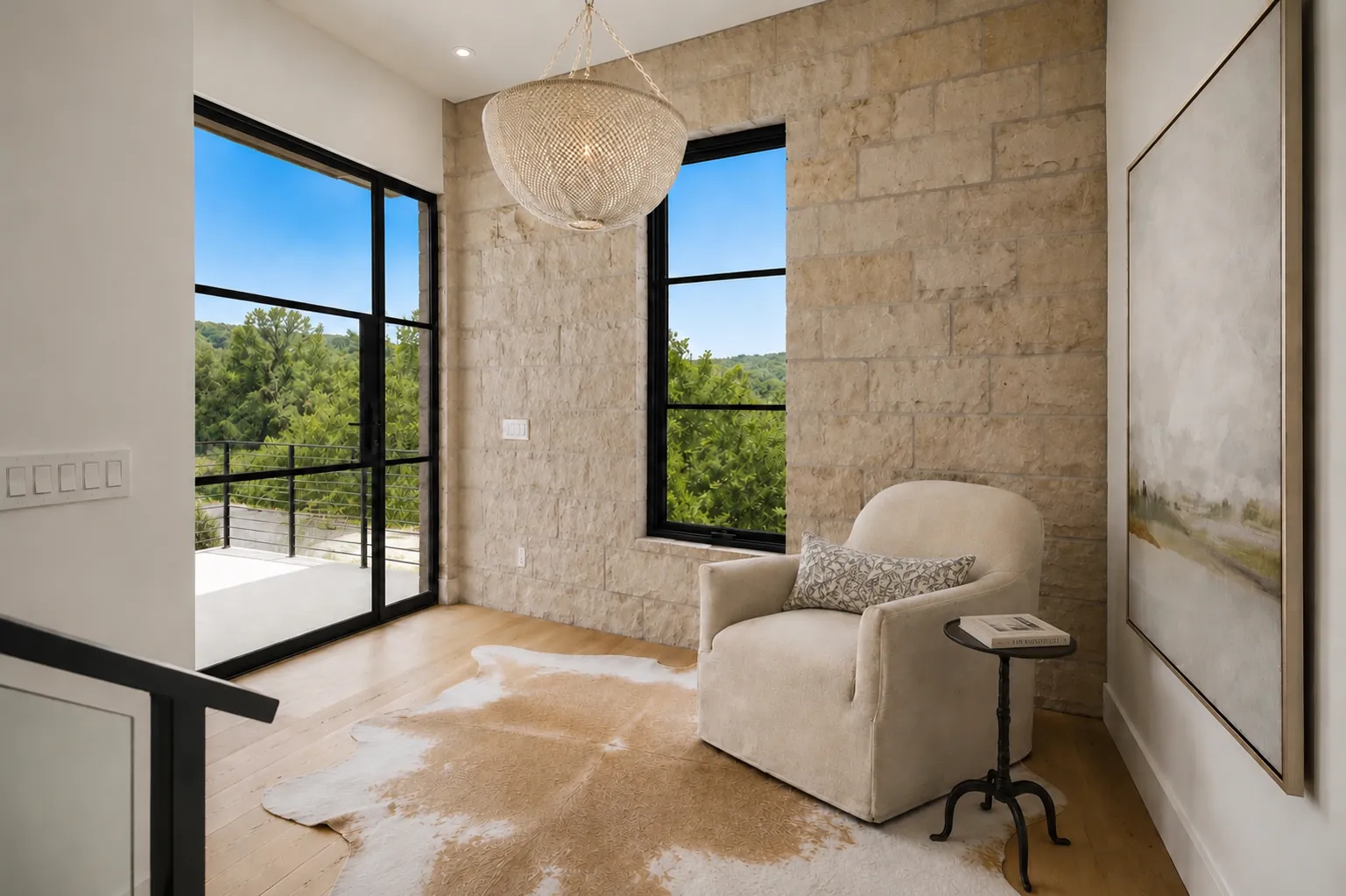
A modern lake house usually means clean lines, big glass and fewer things. The risk is a house that feels like a hotel lobby. The fix is texture: plaster walls, wood ceilings, limestone, linen and rush, and furniture with soft edges. Pull the palette from outside the window (limestone cream, cedar green, the gray green of the water) and save strong color for one or two spots.
That often means planning the great room around the fireplace and the view before the television, choosing counters and floors that shrug off wet feet and hard sun, and leaving native stone raw where it earns it. For stone ideas, read stone fireplace ideas. Browse our living spaces portfolio, and for the finishing layer read lake house decor that doesn't look like a theme.
Lake level and the outdoor rooms
Lake Travis is a reservoir, and its level rises and falls from year to year, sometimes a lot. The view from the porch in a wet spring won't match the view in a dry August. Plan outdoor rooms so they're good places to sit whatever the shoreline is doing: shade, a fire table, comfortable seating and a view of the hills as well as the water. On Lake LBJ around Horseshoe Bay the level holds steadier, so the porch can lean harder on the water.
Questions to settle before design starts
- Is this a full time home, a weekend house or a rental? That decides how hard every fabric has to work.
- Which rooms get the worst afternoon sun, and what time of day do you use them?
- Where do wet towels, life jackets and shoes go on the way in from the dock?
- Does the house need to sit closed for weeks at a time?
- Which windows are too tall or too awkward to reach, and would motorized shades make daily life easier there?
How to start a lake house project with us
A free 15 minute call, then a consultation, in your home or virtual. Then your Design Strategy, from $999 per room: layout, selections, a mood board and a 3D rendering, a 30 minute review call, and a final visit with samples. A whole house or several rooms is quoted after the consultation, and full design and project services are quoted from the approved plan. For a full house, see whole home interior design.
We work within about 28 miles of our Spicewood studio, around the lake from Spicewood to Lakeway, Hudson Bend and Lago Vista.