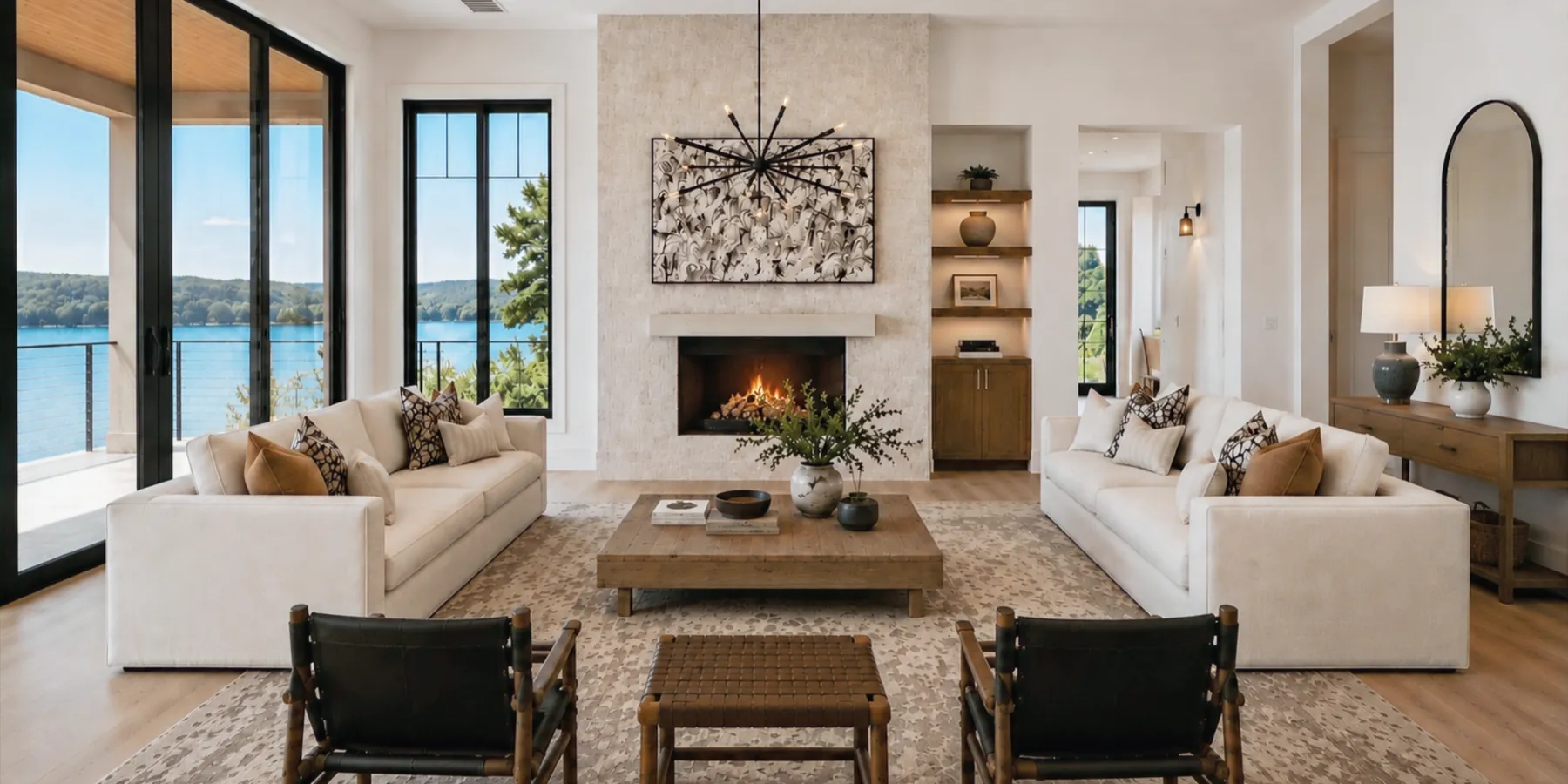
A stone fireplace is the one thing in a living room you can't move, repaint or return. It sets the scale of the room, the color of everything around it and where the furniture goes. So design it first, before the sofa, the rug or the paint.
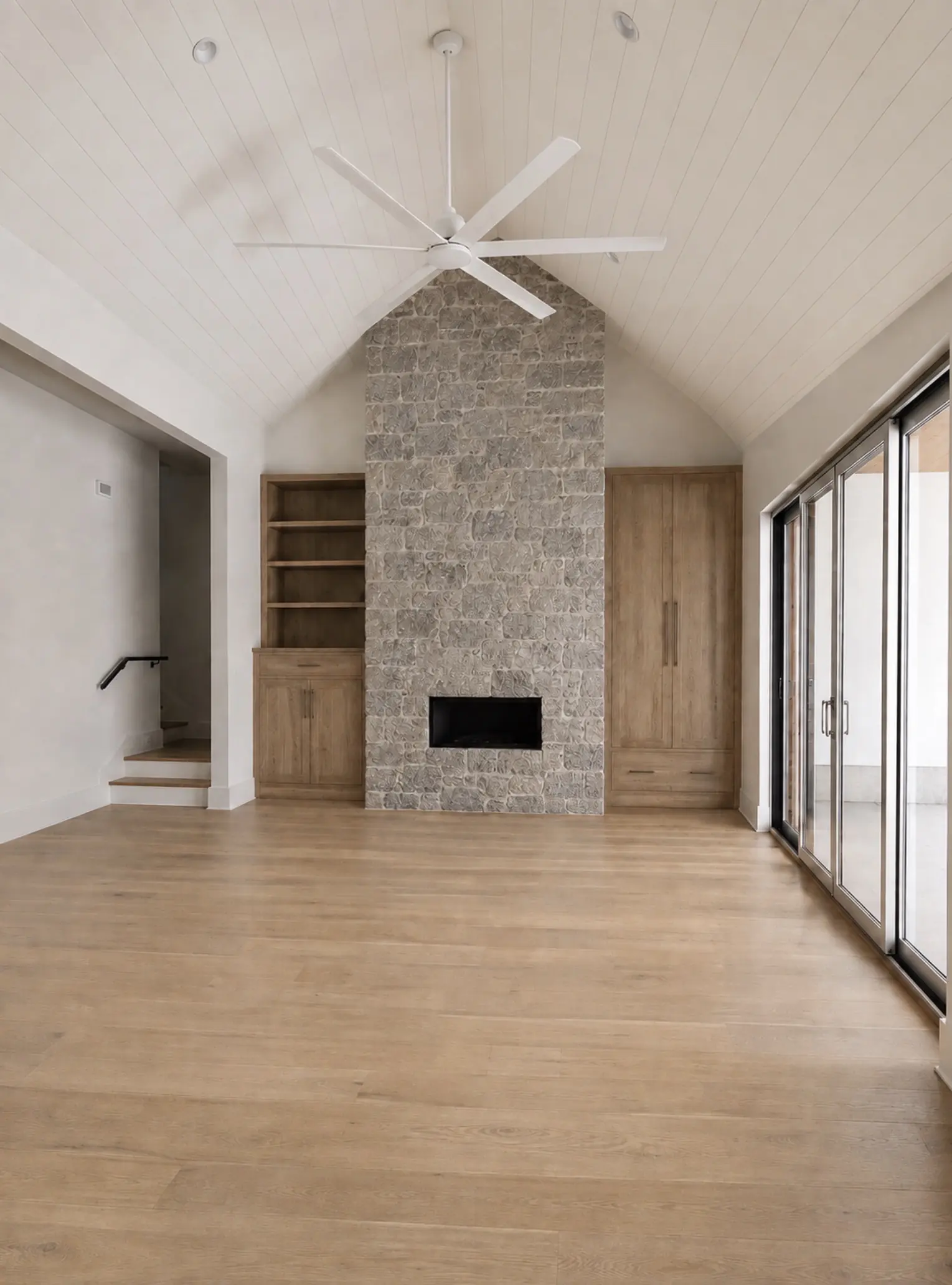
The wall in the photo above is in Mia's own house, and it's still going up. The stone runs from the floor to the peak of a vaulted ceiling, with wood cabinets and open shelves on either side. We'll post the finished room when it's done. It's a good example of how many decisions stack up on one wall, and every one of them is easier to make on paper than in mortar.
How tall should a stone fireplace go?
Floor to ceiling is the right call when the ceiling is vaulted or taller than about twelve feet. Stop the stone at mantel height and you're left with a tall, empty wall above it that no piece of art will fill. Carry it all the way up and the fireplace becomes part of the architecture instead of an appliance on a wall.
Stopping short works better on a standard eight or nine foot ceiling, or when the stone is heavy and dark. A surround that ends at the mantel, with plaster or paneling above, keeps a smaller room from feeling like a cave.
In a vaulted room, follow the ceiling. Stone that runs up to the peak and stops cleanly at the slope looks built with the house. Stone that ends in a flat line a few feet below the peak looks like the budget ran out.
Pick a stone that belongs in the Hill Country
The stone should look like it came from the ground the house sits on. Around Lake Travis that usually means limestone, in cream, buff or warm gray, which is also what the outside of plenty of homes here is built from. Using the same family of stone inside and out ties the living room to the rest of the house.
A few things change the look more than the stone itself:
- The cut. Rough, irregular stone reads rustic. Stone cut into long, flat pieces with a consistent height reads modern.
- The mortar joint. A wide, recessed joint makes every stone stand out. A tight, flush joint in a matching color makes the wall read as one surface.
- The finish. Honed or tumbled stone has a soft, matte look. A sealer with a sheen almost always looks wrong on a fireplace, so ask for a matte one.
Look at a few large pieces of the actual stone in the room before you commit. Stone that looks warm in a showroom can turn gray under north light or orange under a west window at 5pm. It's the same reason every finish in a Design Strategy gets a final visit with samples in the house.
Plan the built-ins with the fireplace
Cabinets and shelves on both sides of a fireplace are one of the most popular ideas for a living room, and they only work when they're drawn at the same time as the stone.
- Line up the heights. The top of the lower cabinets, the hearth and the mantel should relate to each other. When they're a few inches off, the wall looks pieced together.
- Mind the depth. Lower cabinets are usually deeper than the shelves above them, which gives you a ledge for lamps and keeps the upper shelves from overpowering the stone.
- Choose closed storage low, open shelves high. Doors below hide the remotes, games and cords. Open shelves above carry books, pottery and the pieces you want to see.
- Light the shelves. A small LED strip inside each shelf, on a dimmer, is the difference between shelves that disappear at night and shelves that glow. Plan the wiring before the cabinets are built.
You can see a fireplace wall with built-ins on our Living Room Built-In page and another on the fireplace wall concept page.
Where does the TV go?
Most living rooms are arranged around the fireplace, and most families still want a television in there. You have three good options:
- Above the fireplace, with the TV recessed into the stone or on a mount that pulls down to eye level. Plan the power, the cable path and the heat clearance before the mason starts, because none of it can be added later.
- Beside the fireplace, inside one of the built-ins behind doors or a panel.
- On a different wall, so the fireplace can simply be the fireplace. In a big lake house great room this is often the best answer.
Hearth, mantel and firebox
A raised hearth gives you a place to sit and a visual base for a tall stone wall. A flush hearth is cleaner and safer in a house with small kids. A wood beam mantel warms up a light stone and ties it to wood cabinets on either side. No mantel at all keeps a modern wall clean.
Confirm the firebox size and the insert or gas unit before the stone is designed. The opening sets every proportion on the wall, and it's one of the few things you'll need to settle with your builder or fireplace supplier early.
Common stone fireplace mistakes
- Choosing stone from a small sample. A single piece in a showroom tells you almost nothing about a wall twenty feet tall.
- Forgetting the TV until the stone is up. By then the only answer is a surface mount and visible cords.
- Built-ins that ignore the hearth. Cabinets a few inches taller or shorter than the hearth make the whole wall look off.
- Too many materials. Stone, a wood mantel, painted cabinets and a tiled hearth can all work. Add a patterned backsplash in the shelves and it gets busy fast.
What to spend on, and what to skip
Spend on the stone, the mason and the lighting. Those are the parts you'll look at every day and can't redo cheaply. Save on the decorative pieces on the shelves, which you'll change over the years anyway.
Planning a fireplace wall and want a second set of eyes before the stone is ordered? Start with a free 15 minute call, then a consultation in your home or virtual. For finished rooms, see our living spaces portfolio.
Planning a stone fireplace wall?
Book a 15 minute callStone fireplace questions
Q: Should a stone fireplace go all the way to the ceiling? A: In a vaulted room or with ceilings above about twelve feet, yes. Floor to ceiling stone makes the fireplace part of the architecture. On an eight or nine foot ceiling, a surround that stops at the mantel with plaster or paneling above usually looks better.
Q: What kind of stone looks best in a Hill Country home? A: Limestone in cream, buff or warm gray, in a honed or tumbled finish, tends to look the most at home around Lake Travis because it matches the stone many houses here are built from.
Q: Can you put a TV over a stone fireplace? A: Yes, but plan the power, the cable path and the heat clearance before the stone goes up. A recessed niche or a pull down mount keeps the TV at a comfortable height.
Q: How do you style built-ins on both sides of a fireplace? A: Closed cabinets low for storage, open shelves high for books and pottery, heights that line up with the hearth and mantel, and lighting inside the shelves on a dimmer.
Q: Should the hearth be raised or flush? A: A raised hearth gives you seating and a strong base for a tall stone wall. A flush hearth is cleaner and safer with small kids in the house.
Q: What mortar joint looks most modern? A: A tight, flush joint in a color that matches the stone. It makes the wall read as one surface instead of a pattern of individual stones.